
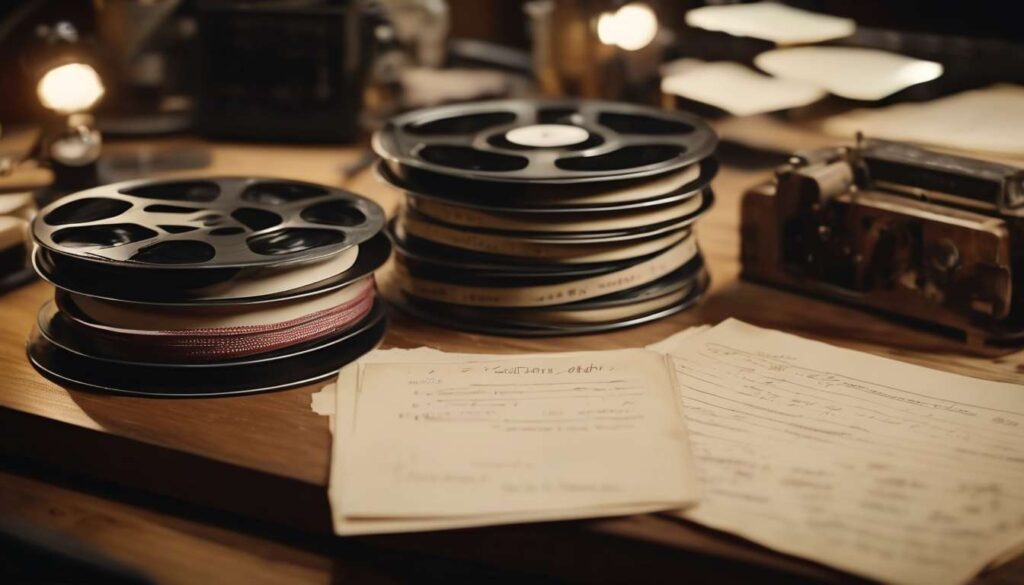
The past decade feels like archiving two different industries at once: on one side, meticulously preserved classic cinema with organized studios and catalogs; on the other, an expansive, decentralized adult film ecosystem that risks vanishing amid platform shifts and legal pressures.
We confront this contrast because preservation choices reflect whose stories we deem worthy of memory.
As archivists, scholars, and community members, we insist that adult movie production heritage deserves the same rigorous stewardship afforded to mainstream film.
We face unique challenges:
- Consent records and performer privacy.
- Explicit-content restrictions and access controls.
- Fragmented distribution networks and ephemeral platforms.
We also see unique opportunities:
- Documenting labor practices within the industry.
- Capturing technological innovation in production and distribution.
- Tracing cultural attitudes toward sexuality across time and communities.
By cataloging production materials, metadata, and oral histories, we can create responsible, accessible archives that respect performers and audiences.
Our task is not to moralize but to preserve evidence of a significant cultural and industrial phenomenon, ensuring it remains available for research, policy-making, and understanding the full texture of cinematic history.
Why Preservation Matters
We preserve adult film production heritage because it documents creative practice, labor histories, and cultural attitudes that would otherwise be lost.
We know these records help us feel connected—to peers, to communities that fought for recognition, and to the craft itself.
By prioritizing digital preservation, we ensure fragile formats survive and become discoverable to everyone who seeks context and care.
We also center consent & privacy:
- Respect performers’ wishes and protect sensitive information.
- Balance access with dignity so members can participate without fear.
Clear archival metadata ties together creators, dates, and production contexts, helping us trace influence and labor networks while keeping materials findable and responsibly described.
When we work together on standards and shared repositories, we build a space where contributors and researchers belong.
This collaborative work ensures histories aren’t erased and future generations can learn without repeating past harms.
In doing so, we honor those whose labor shaped an often-overlooked cultural archive.
Legal and Ethical Challenges
Many legal and ethical questions arise when preserving adult film production materials, and we must navigate copyright, performer rights, obscenity laws, and privacy concerns with care.
We recognize community values and the need to protect creators while making heritage accessible.
We balance legal obligations—copyright durations, licensing, and moral rights—against our mission to document cultural practices.
We also face ethical tensions around consent and privacy.
We respect performers’ autonomy and the potential harm of exposure; decisions about access restrictions and redaction are guided by empathy and legal advice.
Our approach to digital preservation integrates clear policies, risk assessments, and provenance tracking so records reflect responsible stewardship.
Accurate archival metadata is essential.
- It documents rights status, permissions, and restrictions.
- It makes stewardship transparent to researchers and community members.
By collaborating with stakeholders, legal counsel, and participant communities, we create a shared framework that:
- Honors creators.
- Protects privacy.
- Sustains this important historical record.
Consent and Privacy Protocols
We’ll establish clear, documented consent and privacy protocols that specify who can access materials, how permissions are recorded, and when redaction or restriction is required.
We’ll create a shared framework so everyone involved—performers, crew, curators—feels respected and protected as we pursue digital preservation.
- This includes standard consent language, expectations for future use, and processes for raising concerns.
- We’ll store consent records alongside archival metadata to maintain an auditable trail.
We’ll use consent & privacy forms that are explicit about future uses, timelines, and revocation options.
We’ll implement role-based access controls and tiered public availability so sensitive items can be restricted without erasing them.
- Tiered availability might include fully public, researcher-only, embargoed, or restricted-access tiers.
- Role-based controls assign permissions to roles (e.g., curator, researcher, public) rather than individuals.
We’ll agree on procedures for redaction, anonymization, or embargoes when subjects request privacy or when legal concerns arise.
- Define when redaction or anonymization is appropriate.
- Document the redaction process and retain original records securely.
- Implement embargo periods with automatic review dates.
We’ll train staff and contributors on confidentiality, informed consent, and secure handling of digitized assets.
- Training covers data handling, access requests, and how to respond to revocation or privacy complaints.
- Regular refreshers and audits help ensure ongoing compliance.
By centering mutual respect and transparent records, we’ll build a community-curated collection that honors individual choices while ensuring responsible digital preservation for future study and cultural memory.
Metadata Standards Needed
We’ll adopt clear, consistent metadata standards that capture technical, descriptive, legal, and contextual fields so materials remain discoverable, accountable, and usable over time.
Core archival metadata elements will be defined and extended.
- Title
- Creator
- Date
- Format
- Technical provenance
- Rights status
- Production roles (extended)
- Performer pseudonyms (extended)
- Shoot context (extended)
Because we’re committed to ethical stewardship, we’ll embed consent and privacy controls.
- Consent flags
- Privacy flags
- Redaction notes
We’ll align the schema with established digital preservation frameworks and interoperable vocabularies so partners can share records without losing nuance.
Sensitive handling rules and provenance will be documented and connected to records.
- Link records to consent forms
- Log access requests
- Log restrictions
- Include these as part of persistent metadata
We’ll agree on controlled vocabularies and persistent identifiers to reduce ambiguity and support discoverability across repositories.
We’ll create simple guidance and templates so everyone — from archivists to community members — can contribute metadata confidently, knowing their labor strengthens collective memory while safeguarding dignity and legal responsibilities.
Archival Storage Solutions
We will choose resilient, scalable storage strategies that balance redundancy, cost, and access controls to ensure adult film production materials remain secure and retrievable over decades.
We design multi-tiered systems combining on-site copies, geographically separated backups, and trusted cloud services so our community’s work survives hardware failures and organizational changes.
We enforce encryption, role-based permissions, and documented consent & privacy policies so contributors feel respected and protected.
We pair storage with rigorous archival metadata schemas that record provenance, rights, and technical profiles to make retrieval and responsible reuse straightforward.
We commit to routine fixity checks, format migration plans, and transparent audit trails so members can trust long-term integrity.
We prefer interoperable formats and open standards to avoid vendor lock-in and to keep costs predictable.
We plan refresh cycles and budget for ongoing stewardship rather than one-off deposits and cultivate partnerships with cultural institutions and peers to share expertise and infrastructure.
Together we steward materials responsibly, building a welcoming, accountable archive that honors creators and audiences alike.
Recording Oral Histories
We’ll collect and record oral histories with clear protocols, quality audio/video standards, and informed consent procedures so contributors’ stories are preserved accurately and ethically.
We’ll create a welcoming environment that values each narrator’s expertise, explaining how digital preservation safeguards voices and context.
We’ll use standardized equipment and file formats to ensure longevity, and we’ll document technical choices in archival metadata so future users can locate, interpret, and reuse materials.
Consent & privacy:
-
We’ll prioritize consent and privacy by offering granular permissions, options for anonymization, and transparent terms about access and reuse.
-
We’ll obtain consent in writing, review permissions periodically, and respect requests to restrict or withdraw materials.
-
We’ll train interviewers in respectful questioning and trauma-aware practices, keeping sessions collaborative and person-centered.
Metadata & discoverability:
-
We’ll integrate transcripts, timestamps, and descriptive notes into metadata records to enhance discoverability and research value.
-
We’ll document technical and contextual choices so future users can locate, interpret, and reuse materials.
Ethics & community:
- By centering ethical practices and shared ownership, we’ll build a durable oral history collection that affirms contributors’ dignity and strengthens community connections within the preservation effort.
Community-Led Stewardship
Center community-led stewardship so stakeholders directly guide decisions about collection priorities, access rules, and long-term care of adult film production materials.
Create inclusive governance structures where performers, producers, technicians, scholars, and fans share responsibility for digital preservation choices.
Build clear processes for consent & privacy that respect contributors’ boundaries and evolving wishes, ensuring informed participation and withdrawal paths.
Co-design archival metadata schemas that reflect community vocabularies, identities, and production contexts rather than imposing external labels.
Set transparent access levels and review mechanisms so people feel safe contributing sensitive materials while researchers can understand provenance and use restrictions.
Train volunteers and staff together, sharing technical skills and ethical practices to sustain long-term stewardship.
Commit to periodic community reviews of holdings and policies, adapting to new norms and technologies.
Outcome: By centering collective decision-making, we strengthen trust, belonging, and the integrity of the archive while ensuring that preservation practices reflect those whose histories we steward.
Policy and Research Uses
We’ll align preservation practices with policy needs and research questions so archives can responsibly support scholarship, public health, legal inquiries, and informed policymaking.
We’ll create clear guidance that links digital preservation to research goals, ensuring datasets are discoverable and usable without exposing individuals.
We prioritize consent and privacy by embedding access controls, tiered permissions, and anonymization protocols into workflows so contributors and researchers feel safe and respected.
Key protections to implement:
- Access controls — role-based systems, authentication, and audit logs.
- Tiered permissions — public metadata, restricted data for vetted researchers, and sealed records for sensitive material.
- Anonymization protocols — de-identification, differential privacy where applicable, and redaction guidelines.
We’ll standardize archival metadata to capture provenance, rights status, and consent terms, making it easier for policymakers, clinicians, and historians to interpret context and limitations.
Metadata elements to require:
- Provenance — creation date, creator, collection history.
- Rights and consent — licenses, consent scope, expiration/conditions.
- Use restrictions and sensitivity flags — legal or ethical limitations on access or reuse.
We’ll advocate for policies that recognize the cultural value of adult film production heritage while protecting participants, and we’ll collaborate with legal experts to anticipate regulatory needs.
We’ll train researchers on ethical use and require data management plans that honor consent and privacy commitments.
Training and governance should include:
- Mandatory ethics training for researchers accessing sensitive collections.
- Required data management plans describing access, retention, and destruction policies.
- Oversight bodies or review boards to approve sensitive research requests.
By centering trust and shared responsibility, we’ll make archives welcoming, rigorous resources that inform better policies, public health responses, and interdisciplinary scholarship without sacrificing dignity or safety.
How can individuals verify the authenticity of digitized adult film materials and guard against tampering or deepfakes?
Goal: verify authenticity and prevent tampering or deepfakes.
Anchor originals using cryptographic techniques.
- Compute and store cryptographic hashes of original files.
- Use secure timestamps (e.g., blockchain or trusted timestamping services) to record when an original existed.
- Maintain provenance records that log creation, ownership, and key handling events.
Compare and corroborate across sources.
- Compare metadata (file headers, EXIF, edit histories) across copies.
- Consult multiple independent copies or sources to detect inconsistencies.
- Cross-reference timestamps and other external anchors (publication logs, server logs).
Perform expert and technical analysis when needed.
- Use forensic analysis (image/video forensics, audio analysis, file system traces) to spot manipulation artifacts.
- Apply automated detectors and human expert review in combination to reduce false positives.
Train communities and provide accessible tools.
- Train users and communities to recognize common artifacts and suspicious patterns.
- Promote the use of vetted verification tools (trusted software, validated models, certified services).
Document and preserve chain of custody.
- Keep a clear, auditable chain of custody for evidence and important originals.
- Log who accessed or modified files, when, and under what authority.
Share findings openly to build confidence.
- Publish verification results, methods, and provenance records where appropriate so stakeholders can independently assess authenticity.
- Encourage transparency about uncertainty and limitations to maintain trust.
What specific file formats and checksums should independent researchers use to ensure long-term accessibility outside institutional archives?
We’ll use open, well-documented file formats for long-term accessibility.
Images: TIFF or JPEG 2000.
Audio: WAV or FLAC.
Video: MKV with lossless codecs, or MP4 (H.264) where lossless is impractical.
Documents: PDF/A, plain text, or CSV.
We’ll generate and manage cryptographic checksums to ensure integrity.
- We’ll generate SHA-256 checksums for primary integrity verification.
- We’ll keep SHA-512 checksums as a backup/stronger alternative.
We’ll store checksum files separately from the content.
- Keep checksum files in a different storage location or system than the original files.
- Consider storing checksums in multiple places (e.g., repository metadata, a separate integrity server, or immutable logs).
We’ll refresh copies periodically to maintain resiliency.
- Schedule regular fixity checks (compare stored checksum with freshly computed checksum).
- Replace or refresh any corrupted or degraded copies promptly.
- Use multiple geographic/storage locations to reduce risk of simultaneous loss.
Additional notes and best practices.
- Prefer open, documented formats with broad community support and available migration paths.
- For video, use lossless in MKV when feasible; for large collections where storage is constrained, H.264 MP4 is an acceptable pragmatic choice.
- Track file format versions and migration plans so you can reformat if a format becomes obsolete.
- Record provenance and preservation metadata alongside files (e.g., format, encoder, checksum algorithm, date generated).
Are there recommended practices for indexing and tagging content to make sensitive materials discoverable for scholarly use while minimizing accidental exposure?
Goal: Enable discoverability of sensitive materials for qualified scholars while minimizing accidental exposure.
Use controlled vocabularies, layered metadata, and granular access tags.
- Create a vetted set of subject headings and controlled terms for sensitive topics to avoid ambiguous or sensational language.
- Implement layered metadata so that basic discovery fields (title, summary, topical tags) are separate from sensitive descriptive details (explicit content descriptions, names, locations).
- Attach granular access tags to metadata elements (e.g., public, restricted, sealed) so access can be enforced at the field level rather than only at the item level.
Separate discovery metadata from descriptive details.
- Keep discovery metadata minimal and non-sensitive so search results can return useful records without exposing details.
- Store sensitive descriptive fields in a protected metadata zone that requires additional authorization to view.
Apply consent, provenance, and rights fields.
- Record consent status and any use restrictions explicitly in metadata (who consented, scope, expiration).
- Capture provenance information (source, collector, date collected) to support ethical review and contextualization.
- Include rights and legal restriction fields to guide permissible access and reuse.
Record sensitivity and redaction markers.
- Add structured sensitivity markers (e.g., level: low/medium/high; category: personal, legal, safety, cultural) to each record.
- Maintain redaction flags on specific fields or attachments, and store redacted and unredacted versions separately with access controls.
Implement role-based search filters and opt-in request workflows.
- Provide role-based filters so only users with appropriate roles (e.g., vetted scholar, reviewer) can discover or refine searches that include sensitive-tagged items.
- Offer an opt-in request workflow for additional access: authenticated researcher requests → justification, institutional affiliation, ethical approval → review/approval process → time-limited access granted.
Log access and review tags regularly to stay accountable and inclusive.
- Maintain detailed logs of who searched for and accessed sensitive records, what fields were returned, and any redaction or tag changes.
- Schedule periodic review of sensitivity, consent, and tagging decisions with diverse stakeholders (including community representatives where relevant) to ensure inclusivity and to update classifications.
Operational recommendations (implementation checkpoints).
- Define controlled vocabularies and sensitivity taxonomy with legal, ethical, and community input.
- Build metadata schema supporting layered fields and field-level access controls.
- Integrate authentication/authorization and role management for search and access.
- Implement request/approval workflows with audit trail and time-limited provisioning.
- Provide training and documentation for indexers, reviewers, and researchers.
- Monitor logs and schedule periodic tag/review audits with stakeholder participation.
Outcome: Scholars can locate relevant sensitive materials via safe discovery paths while protections (field-level access, consent tracking, audit logs, and review processes) reduce accidental exposure and maintain ethical, legal, and community standards.
Conclusion
You’ve seen why preserving adult movie production heritage matters: it documents labor, culture, and history often erased from mainstream archives.
You’ll face legal and ethical hurdles, so you’ll need strict consent, privacy protocols, and robust metadata to make materials usable and safe.
You’ll choose secure storage, collect oral histories, and support community-led stewardship.
When you pursue policy and research uses, you’ll balance access with dignity and ensure these records inform future understanding responsibly.